
Protection for sound asphalt
Sealcoating in Alexandria, VA
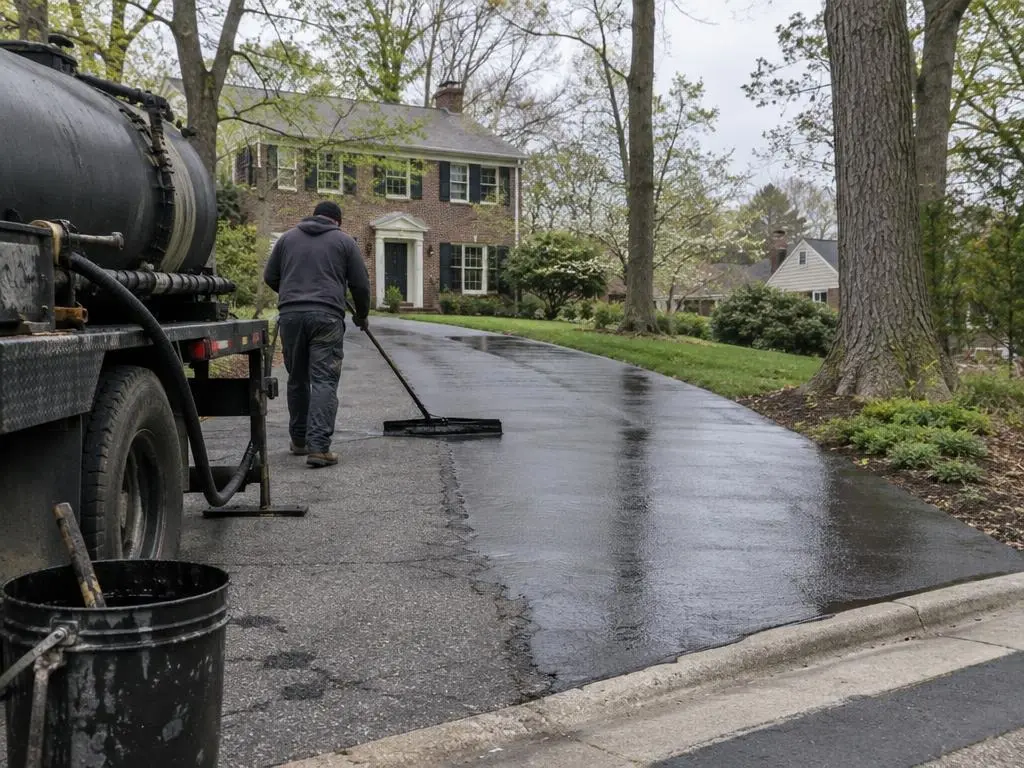
Cracks filled before winter, surface sealed against sun and water.
- Free on-site estimates with a written, itemized quote
- Curb cut and right-of-way questions sorted out before work is scheduled
- Soft or wet ground dug out and rebuilt before paving
Slowing Down the Wear
Sealcoating spreads a thin protective coating over asphalt to slow the oxidation that turns it gray and brittle and to keep water out of the surface. Paired with crack filling, it is the most cost-effective way to stretch the life of a driveway or lot that is still structurally sound. It does not fix a failed base, so a driveway with sinking or spreading alligator cracks needs repairs first.
Freeze nights and summer sun
Washington-area winters average about 64 nights at or below freezing, and summers bring roughly 37 days at 90 degrees or more. Water that gets into an open crack freezes and widens it; long, hot days dry out the binder on top. Filling cracks in late summer or fall and keeping the surface sealed limit both.
Crack filling comes first
We blow out each crack and fill it with a hot-applied rubberized filler that stays flexible as the pavement moves. Sealer alone is too thin to fill a crack; it just sinks in and the crack shows again. Wide, spreading cracking is patched rather than filled.
Preparation
- Blowing and sweeping the surface, edges included
- Scraping and priming oil stains so the sealer sticks
- Crack filling and letting the filler set
- Hand edging along garage slabs, walks and curbs
- Keeping sealer off brick, stone and concrete
In neighborhoods with brick sidewalks and stone walls, careful edging and masking matter.
When to seal
HomeGuide recommends waiting 3 to 6 months after paving before the first coat and resealing every 2 to 10 years depending on the product and climate. Sealer needs dry weather between about 50 and 95 degrees, and cars should stay off for 12 to 72 hours. Spring and early fall usually work best here.
Sealer choices
HomeGuide notes that coal tar sealers resist fuel stains but are banned in many places over health and environmental concerns, while asphalt emulsion sealers are considered more environmentally friendly but stain more easily from gas and oil. We tell you which product we will use before the job.
Lots and HOA common areas
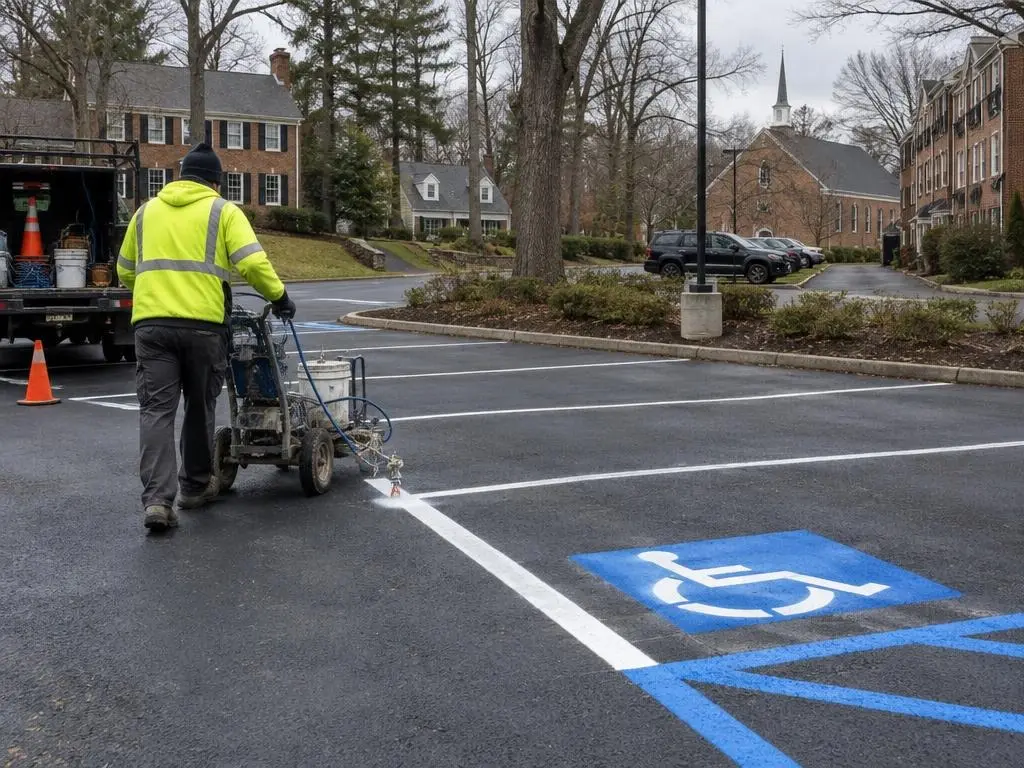
For parking lots and HOA parking courts, sealing is done in sections so residents and customers still have places to park, and restriping follows once the sealer cures. HomeAdvisor suggests sealing lots every 2 to 5 years depending on traffic.
Signs it is time
- The surface has turned gray
- Small stones are loosening on top
- Water soaks in rather than beading
- Hairline cracks are appearing
What This Covers
Clean, fill, prime and seal.
Hot-pour crack filling
Cracks cleaned and filled with flexible rubberized filler.
Oil-spot priming
Stains scraped and primed so sealer bonds.
Driveway seal coat
Sealer applied with hand-finished edges.
Lot sealing
Lots sealed in sections, restriped after curing.
Typical Sealcoating Costs
| Item | Published range |
|---|---|
| Driveway sealcoating (HomeGuide) | $1 to $2 per sq ft |
| One-car, 288 sq ft (HomeGuide) | $290 to $580 |
| Two-car, 24 x 24 ft (HomeGuide) | $580 to $1,200 |
| Crack filling (HomeGuide) | $0.50 to $3 per linear ft |
| Crack filling, typical driveway (Angi) | $100 to $400 |
| Lot sealcoating (HomeAdvisor) | $0.15 to $0.30 per sq ft |
These are national figures from published cost guides. Northern Virginia labor, tight access and right-of-way work often land jobs in the upper half of a range. The written estimate is what you pay.
Step by Step
1. Check
We confirm the asphalt is sound enough to seal.
2. Clean and fill
Surface cleaned, stains primed, cracks filled.
3. Seal
Sealer applied in dry, mild weather.
4. Cure
Area closed until it can take traffic.
Sealcoating Questions
How often should I sealcoat in Northern Virginia?
Every few years, once the surface has faded and stone is showing. HomeGuide's range is 2 to 10 years by product and climate.
Can sealcoating fix cracks?
No. Cracks are filled first, then sealed over.
How long until I can drive on it?
Usually 12 to 72 hours depending on temperature, humidity and shade.
Will sealer get on my brick sidewalk?
We hand-edge along brick and concrete and mask where needed to keep sealer off.
How do I know my driveway needs sealing?
When it has faded to gray, small stones are loosening and water soaks in instead of beading.
Sealcoating Service Areas
- Asphalt Paving in Alexandria, VA
- Asphalt Paving in Arlington, VA
- Asphalt Paving in Falls Church, VA
- Asphalt Paving in Fairfax, VA
- Asphalt Paving in Annandale, VA
- Asphalt Paving in Springfield, VA
- Asphalt Paving in Burke, VA
- Asphalt Paving in West Springfield, VA
- Asphalt Paving in Franconia, VA
- Asphalt Paving in Kingstowne, VA
- Asphalt Paving in Rose Hill, VA
- Asphalt Paving in Lincolnia, VA
- Asphalt Paving in Huntington, VA
- Asphalt Paving in Belle Haven, VA
- Asphalt Paving in Groveton, VA
- Asphalt Paving in Hybla Valley, VA
- Asphalt Paving in Fort Hunt, VA
- Asphalt Paving in Mount Vernon, VA
- Asphalt Paving in Woodlawn, VA
- Asphalt Paving in Lorton, VA
- Asphalt Paving in Mantua, VA
Get a Sealcoating Estimate
Free sealcoating estimates in Alexandria and nearby.